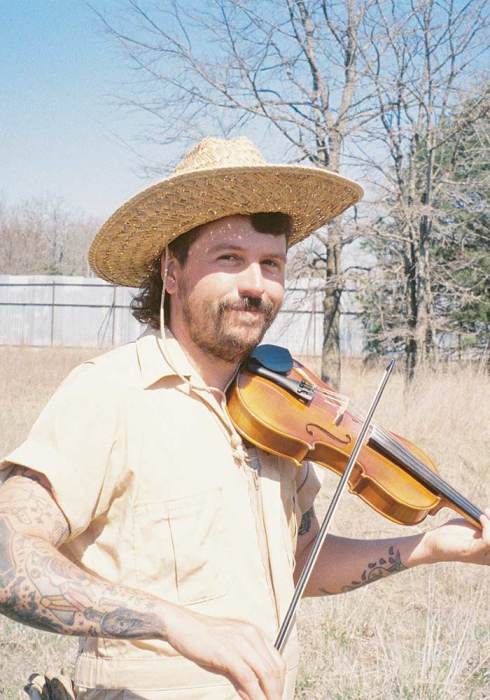
Nick Shoulders
w/ Ramsey Thornton
Apocalypse, Never! Tour
Add to Cal
TICKETS
$25 + fees
DAY OF SHOW: $30 + fees
MEMBER + ARTIST PRE-SALE: Wed, Apr 8, 10 am
PUBLIC SALE: Fri, Apr 10, 10 am
For online ticketing sales & support, contact [email protected] or call 1-877-466-3404.
For in-person sales, visit the Lensic box office.
VENUE: TUMBLEROOT BREWERY & DISTILLERY
SEATING: Limited
ADA: Yes, please notify a Tumbleroot representative upon arrival
PARKING: Yes
ALCOHOL: Yes
OUTSIDE FOOD/DRINK: No
Please be advised that by entering this event, you are agreeing to being filmed and/or photographed, and the resulting assets may be used for Lensic marketing or promotional purposes. Should you wish not to be photographed or recorded on video, please notify a staff member or one of the event photographers/videographers.
NICK SHOULDERS
Refugia Blues, the fifth album from Nick Shoulders, is a record of big ideas and small, intimate moments.
These nine songs are rooted in the stylings of Southern traditional music. Sparse, timeless, and unamplified, they're older than the sounds Shoulders saluted on albums like 2023's All Bad, with its loud, whooping anthems for roadhouses and sweaty dancehalls. Here, Shoulders isn't shouting over a band. He isn't bringing a crowd to its feet with dance-ready tempos. Rather, he's exploring another side of his craft by stepping up to a ribbon microphone as a solo performer, delivering each song with acoustic instruments and a voice that's equal parts country croon, Appalachian yodel, and high-lonesome field holler. As he explains it, Refugia Blues isn't just a call to action; it's a call to rest, too.
"This is my Nebraska," he says, nodding to Bruce Springsteen's lo-fi acoustic record from 1982. "Some people listen to Bruce for the E Street Band and the big radio hits, but I like the intimacy and rawness of Nebraska instead. I'd like to think of Refugia Blues as a little window into the heart, as opposed to the drumbeat of a revolution."
Even so, Refugia Blues resolutely pushes for change. Shoulders' interpretation of American roots music has always been more progressive and punky than the trucks-and-beers conservatism that passes for modern-day country, and he isn't checking his activism at the door anytime soon. Refugia Blues does dive into personal territory, from "Bored Fightin'" (a self-effacing look at Shoulders' reputation as a left-of-center radical) to the heart-on-sleeve love song "Tatum Spring," but it balances the micro with the macro, too. Topics like climate collapse, radical anthropology, generative disruption, and southern identity run throughout the record, adding weight to Shoulders' melodies, balancing his witty humor with topical weight. The purpose, he says, is to utilize his music as "a Trojan Horse that can be accepted by people who don’t hear anything to challenge their sense of comfort and superiority. That's always been the goal — to say what needs to be said, but to intersperse it with joy, humor, and melody."
At once academic and accessible, Refugia Blues isn't just a deep dive into southernness, but also into Shoulders himself. Released during an era of big-budget country-pop smashes, it stands tall as something else entirely: a raw, resolute version of American country music, punctuated with humor and heavy insights, stacked high with songs that go down easy but linger in the minds of those willing to invest the time.
RAMSEY THORNTON
Ramsey Thornton makes modern-day folk music for early mornings and quiet hours. It's a warm, rhythmic sound, fueled by intricate fingerpicking and the observational storytelling of a lifelong musician who's still discovering new horizons.
Long before he became an unsung hero of Tulsa's music scene — playing banjo in Ken Pomeroy's band, drumming for jazz combos, and collaborating with hometown heroes like Wilderado — the Oklahoma native began drumming at 6 years old. By his late-teens, he was playing stringed instruments, too. Banjo came first. Acoustic guitar followed, with Ramsey developing a hypnotic, percussive style — including intricate rhythms and uniquely phrased arpeggios — that seemed to nod to the two instruments he'd already learned.
While backing up artists across Tulsa during his early 20s, Ramsey started writing songs of his own, creating a unique version of American roots music fueled by banjo twang and folky hooks. Later, while wrapping up a graduate program at Oklahoma State University, he began writing the music that would fill his full-length debut, I Called It!.
Ramsey recorded the record in Brooklyn, where he teamed up with Isaac Stalling and Sam Skinner (Pinegrove) in a Bed-Stuy studio. They anchored each song with a live performance of guitar and vocals, adding other instruments — from the interlocking layers of strings that sweep through "Tony's Song," a gorgeous duet with Ken Pomeroy, to the brushed percussion and keyboards that punctuate "Backyard" — for textural effect. Back home in Oklahoma, Ramsey tapped Chad Copeland (Broncho, Wilderado) to contribute synth, drones, and other atmospherics to tracks like "Fourth of July." Even so, I Called It generally unfolds like a one-man show, capturing Ramsey Thornton in his element: intimate, locked-in, and focused on the present moment.