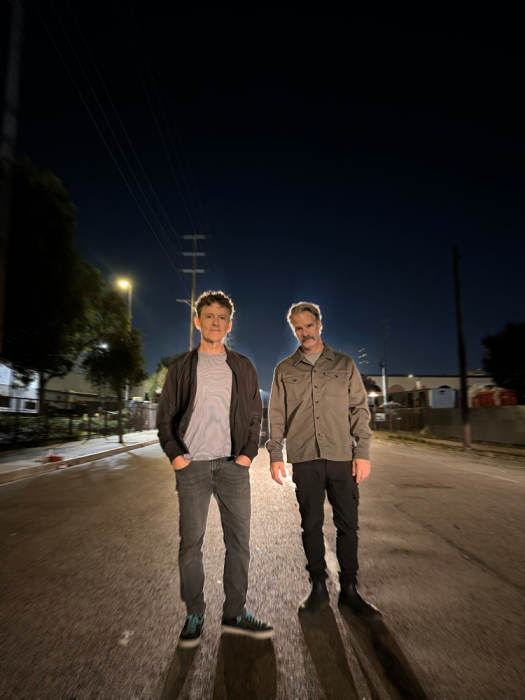
El Ten Eleven
w/ Snorkler
Add to Cal
TICKETS
$20 + fees
DAY OF SHOW: $25 + fees
PUBLIC SALE: Wed, Jun 3, 10 am
For online ticketing sales & support, contact [email protected] or call 1-877-466-3404.
For in-person sales, visit the Lensic box office.
VENUE: TUMBLEROOT BREWERY & DISTILLERY
SEATING: Limited
ADA: Yes, please notify a Tumbleroot representative upon arrival
PARKING: Yes
ALCOHOL: Yes
OUTSIDE FOOD/DRINK: No
Please be advised that by entering this event, you are agreeing to being filmed and/or photographed, and the resulting assets may be used for Lensic marketing or promotional purposes. Should you wish not to be photographed or recorded on video, please notify a staff member or one of the event photographers/videographers.
EL TEN ELEVEN
We like to believe our lives can be shaped into stories—clean arcs, legible meaning—but life refuses the outline. Instead, it moves bluntly and without apology, indifferent to our sense of order. Events pile up without resolution, momentum divorced from direction, motion confused for progress. Sometimes the only refuge left is the nowhere of our own minds.
El Ten Eleven’s Nowhere Faster, the duo’s 16th release, was forged within that unease. Across eight tracks, it considers not just nothingness but velocity—the strange urgency that propels us forward even when the destination remains unclear. We are committed to acceleration, convinced speed itself might save us. The 33-minute album slows just long enough to pose the harder questions: what are we running from, and what do we think we can outrun.
That tension appears even in the album’s artwork, once again created with longtime collaborator Rob Fleming. It depicts a classic liminal space: familiar, anonymous, quietly unsettling. A stained glass-colored building and a streetlamp blur at the edges, suggesting motion that feels less like escape than enclosure—the kind that traps rather than transports.
Nowhere Faster emerged from Kristian Dunn and Tim Fogarty’s longest break from touring and recording in their 23 years together, though “break” is something of a misnomer. Dunn’s famously restless creative pace never slowed. Instead, he began writing for not one but two drummers, handing Fogarty one of the most demanding challenges of his career. The record also marks a first for the band, weaving real strings and piano throughout, deepening the palette of what is already one of their most layered works.
The album’s titles and sounds draw from moments scattered across the band’s 23-year history. Opener “Uncanny Valley Girl” marks the return of long-retired effects like the delay pedal, stacking basslines into a dense, enveloping wall. It’s a clear-eyed take on AI-era paranoia, anchored by Fogarty’s steady rhythm—snare taut, cymbals gently alive—giving the sci-fi unease something solid to lean on. “Bjork’s Alarm Clock,” meanwhile, takes its title from an insult hurled at the band by a guitarist of a punk band on their first tour; you can almost hear Dunn and Fogarty’s quiet laughter beneath the buoyant bass and bow-scratched strings.
Still, Nowhere Faster is not a retreat into nostalgia. El Ten Eleven remains invested in risk and reinvention. The record continues to center Fogarty’s propulsive drumming and Dunn’s bass-driven experimentation: the first four tracks (“side A”) feature electric bass, while the latter half (“side B”) shifts to acoustic bass processed through pedals, subtly altering the album’s emotional weight. “Last Night In The Kitchen” reaches for the slick, sleazy bombast of classic Bond themes, opening new corridors for Dunn’s ever-expanding musical ambitions.
Album closer “So It Goes” draws inspiration from Dunn’s reading of Kurt Vonnegut’s Slaughterhouse-Five, coinciding with his reckoning with aging, loss, and the deaths of friends. Built around one of his stranger sonic experiments—a capo wrapped around a fretless acoustic bass—the song unfurls into a twangy, americana-inflected lament. It sounds like the quiet moments when reflection catches up to us, when we take inventory of the gnashes and scars left by the jaws of life.
Ultimately, Nowhere Faster is an album about reckoning—about time, endurance, and the uncertainty of how long a band, or a life, can last. We are all fumbling toward finitude. The question is not whether we’ll arrive, but what we want to hear on the way there. What will we dance to as the ground begins to shift beneath us? If nothing else, it may sound something like Nowhere Faster.